
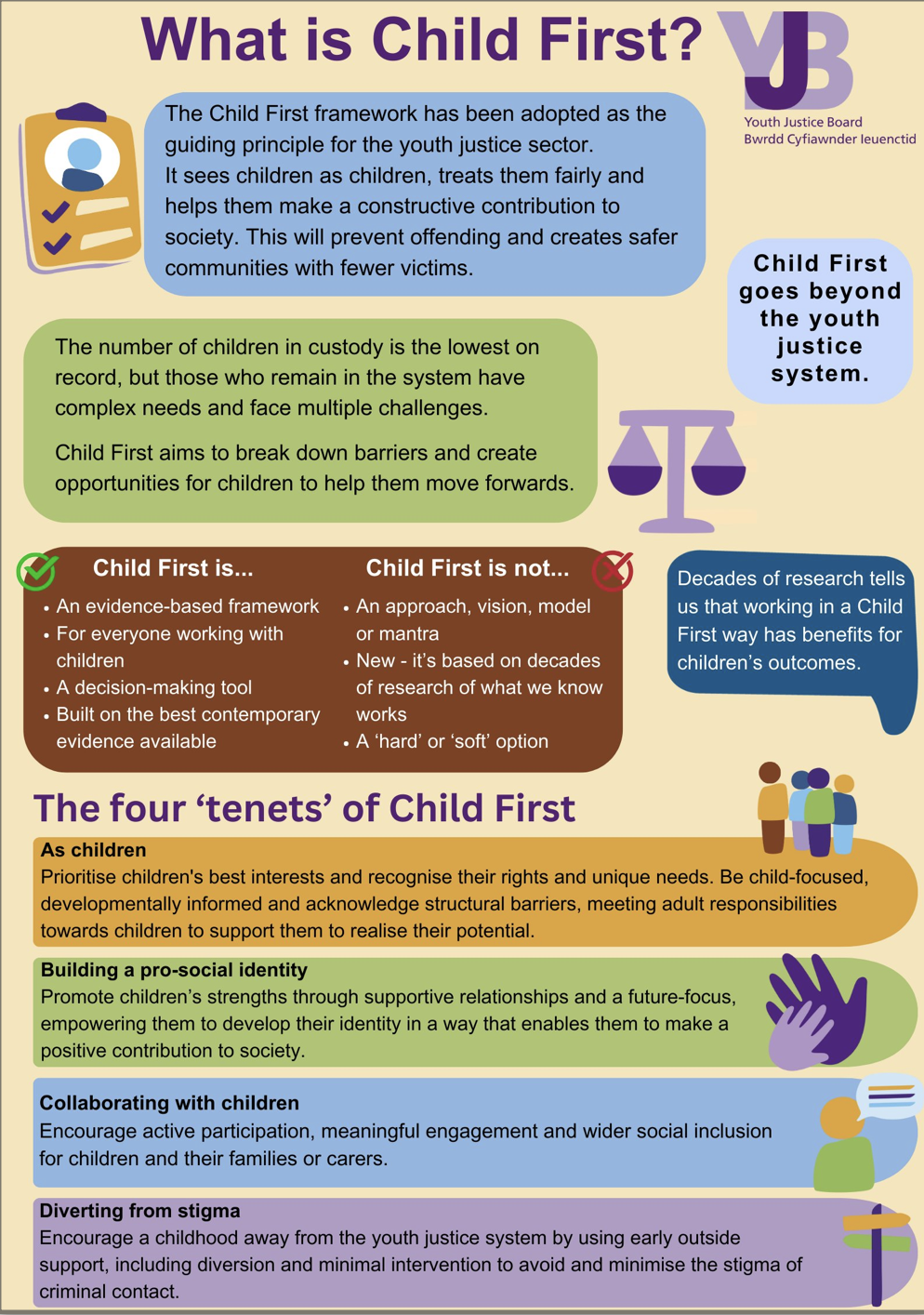
Child First Justice Is Based on Decades of Research Showing What Works
Developed in the UK Youth Justice Policy Research and anchored by the United Nations Convention on the Rights of the Child, this model:
Sees Children as Children
Promotes Positive Identities
Builds Constructive Partnerships
Promotes Diversion
Principal 1: See the Child as a Child
Recognize Developmental Maturity
Understand Trauma and Vulnerability
Avoid Adult Models of Justice
Tailor Responses to Developmental Needs
Principal 2: Promote Positive Identity
Move Away from Labels like ‘Offender’
Support Education, Skills, and Strengths
Encourage Pro-Social Identity and Belonging
Reinforce Positive Achievements

Principal 3: Build Constructive Partnerships
Families are Key Partners
Communities are Part of the Solution
Multi-agency Collaboration is Essential
Victims should be Meaningfully Included
Principal 4: Promote Diversion and Early Intervention
Avoid Formal Justice System Entry where Possible
Early Intervention is More Effective and Cost Effective
Reduces Long-Term System Demand
Community-based Responses Often Work Better

What Leaders Can Do

*Information from Youth Justice Agency, Northern Ireland
